Mains water supply is the responsibility of the local Council (Câmara Municipal) or, in many cases, its municipal water service (Serviços Municipalizados de Água e Saneamento – SMAS). Traditionally, each Council managed its own water capture, treatment, and distribution, but smaller municipalities often lacked the scale and resources to ensure consistent water quality.
To improve efficiency and meet European standards, many Councils have since joined together in larger multi-municipal systems operated in partnership with Águas de Portugal (a state-owned holding company). These companies manage water treatment and supply potable water to municipalities, which remain responsible for the final distribution, billing, and customer service. A well-known example is EPAL (Lisbon’s water company), which supplies Lisbon and surrounding municipalities. Similar regional systems now exist across the country, including in the north, Setúbal, and the Algarve.
Water services are monitored and regulated by ERSAR (the national Water and Waste Services Regulation Authority), which ensures service quality, tariff fairness, and compliance with EU regulations. The Ministry of Health also oversees public health aspects, including independent monitoring of drinking water quality. Annual reports on water quality and service performance are published and publicly available.
Obtaining a mains water connection
Procedures for obtaining a new water connection vary by municipality. In smaller towns, water services may be handled directly through the Council’s general offices. In larger towns, Councils typically operate a dedicated Water Department (Serviço Municipal de Água) or semi-autonomous Municipal Water Company (Serviços Municipalizados).
To apply, you generally need:
Proof of identification
Fiscal number (NIF)
Proof of legal occupancy of the property (e.g. land registry extract – Caderneta Predial, rental agreement, or purchase deed – Escritura de Compra)
Most municipalities provide clear contact details on their websites and water bills. Increasingly, services are available online, including applications, meter readings, and payments.
Billing and payment
Water is metered, and billing cycles vary — monthly in some municipalities, quarterly in others. Bills may sometimes be based on estimated readings, with adjustments made once actual readings are obtained. If your meter is accessible, you can verify consumption yourself, though in some areas meters are in locked boxes.
Payment options also vary but typically include:
Direct debit (increasingly common)
Multibanco (ATM or online banking)
Payments accepted at some Council offices or local Parish Councils (Junta de Freguesia)
Tariffs differ significantly between municipalities. Some heavily subsidise water services, while others apply cost-reflective pricing, leading to noticeable regional differences in household bills.
Water consumption and saving water
Average household consumption is about 3 cubic metres per person per month, but this may increase significantly if mains water is used for irrigation or swimming pools.
To save water:
Design gardens with drought-resistant plants (native Mediterranean species are ideal).
Avoid lawns or water them sparingly.
Use drip or micro-irrigation systems, ideally at night.
Cover swimming pools to reduce evaporation.
Many households with boreholes or wells use those for irrigation to reduce reliance on treated mains water.
Plumbing
In older buildings, galvanised pipes embedded in walls may corrode, particularly in coastal areas. Modern plumbing uses flexible polypropylene piping in conduits, which is easier to replace. Hard water remains an issue in some regions, although treatment upgrades have reduced scaling problems.
Boreholes and wells
Overuse of aquifers, particularly in the Algarve, has raised sustainability concerns. All boreholes and wells must now be registered with the Portuguese Environment Agency (APA – Agência Portuguesa do Ambiente).
Before opening a new borehole, check with your local Council (Câmara Municipal) for planning restrictions. In urban areas, new wells are often prohibited to protect public water supplies. For drinking water, minimum distances from septic tanks and potential pollutants apply, and testing through the local Health Centre (Centro de Saúde) is recommended.
Traditional water rights
In rural areas, some properties have long-standing rights to springs, streams, or irrigation channels. These arrangements are often informal and locally enforced but can be sensitive during summer when water is scarce. Always verify such rights with neighbours and the Council (Câmara) before purchase.
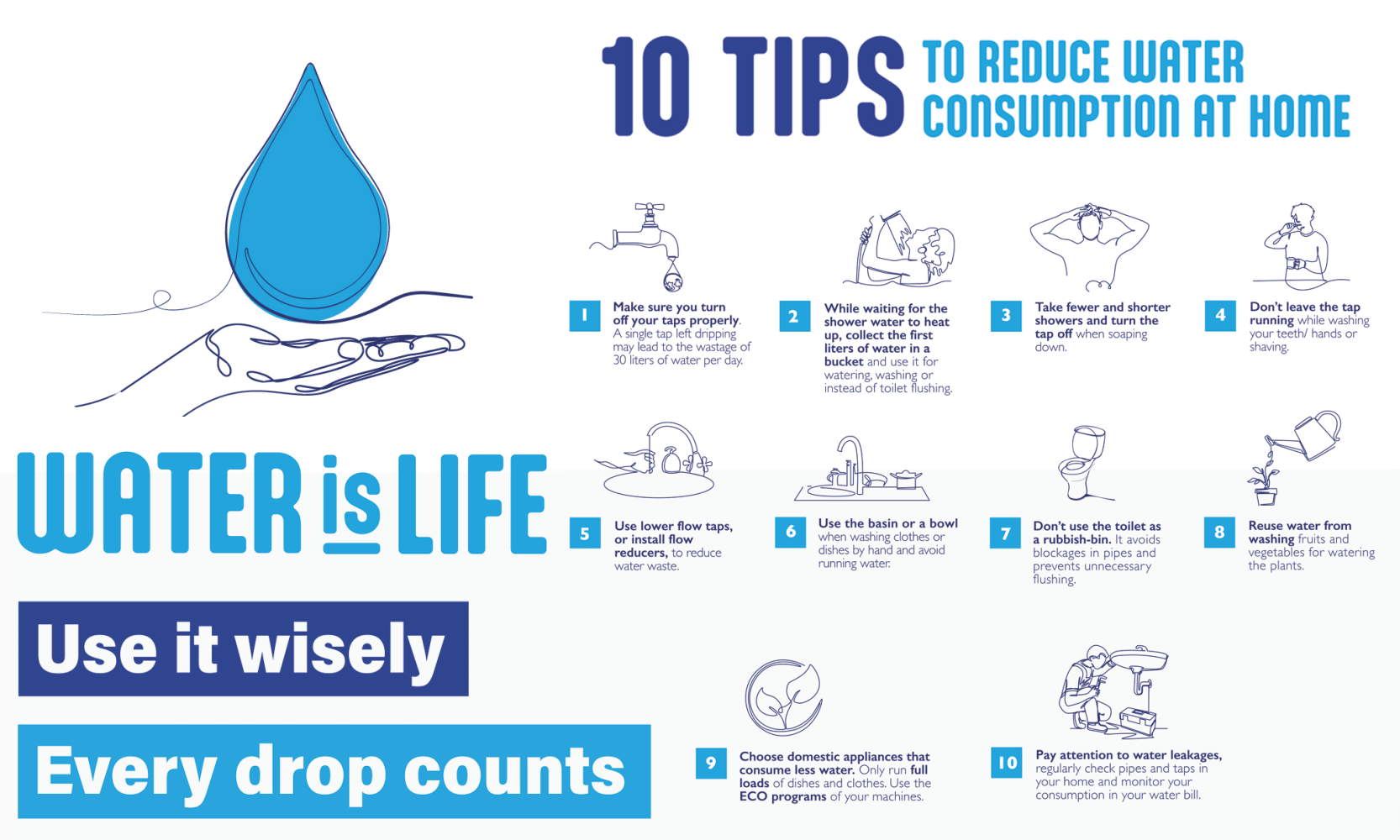
Top 10 tips from Water is Life to reduce water consumption
Disclaimer
afpop considers in good faith that all the information provided is true and accurate after having endeavoured to so confirm to the best of its ability. However, afpop is not qualified to render any technical advice, recommendation or information, nor is it under any legal duty to do so. Therefore, afpop declines any responsibility for possible damages arising directly or indirectly to members or non-members from alleged incorrect or misleading advice, recommendation or information and strongly advises all members to seek always the services of qualified practitioners and/or professionals for any technical matters, such practitioners and/or professionals being exclusively responsible for possible damages arising from their activity, including their technical opinions that may be inserted in our publications.